loader image
First Aid Training in New Jersey - Same Day CPR Certification

First Aid Training in New Jersey – Same Day CPR Certification

Need your CPR certification fast? We provide same Day CPR and First Aid Certification, in-person training across New Jersey.

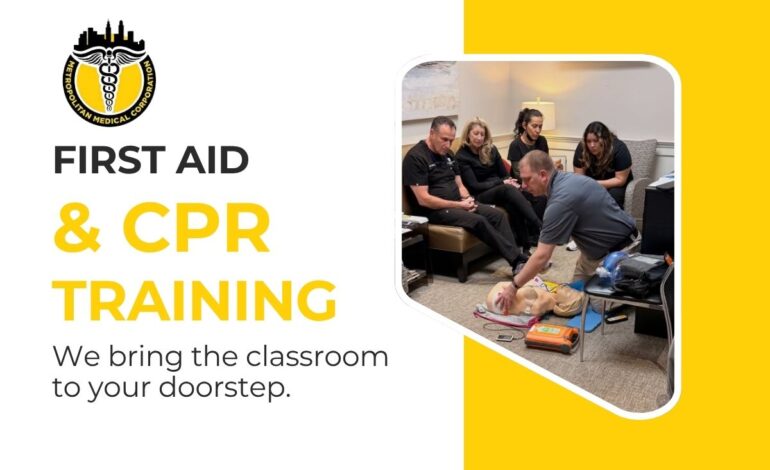
Whether you are a healthcare professional or a workplace safety coordinator, if you are searching for CPR and First Aid certification that fits your busy schedule, Metropolitan Medical Corporation offers the most flexible solutions in the Garden State. From Pulse Check CPR NJ standards to comprehensive lifesaving techniques, we bring the classroom to your doorstep.

Why Choose In-Person First Aid Training?

While online courses offer convenience, nothing beats the confidence gained through hands-on experience. In-person training allows you to master the exact depth of compressions and the rhythm of life-saving breaths under the direct guidance of experts.

Master the Life-Saving Tools

We believe in learning by doing. That’s why our classes use live equipment and real-world products to ensure you are ready for any emergency. You won’t just read about it-you’ll get hands-on practice with:

·LiveVAC units for choking emergencies.

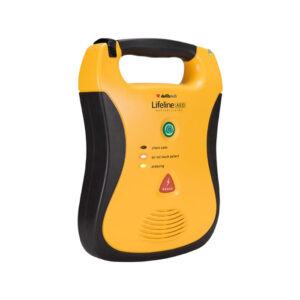
· Automated External Defibrillators (AED) to understand real-time prompts.

·Team CPR tactics to coordinate life-saving efforts seamlessly.

Benefits of Face-to-Face Learning:

  • Real-time Feedback: Instructors correct your form instantly.
  • Equipment Familiarity: Get comfortable using AEDs and manikins.
  • Confidence Building: You leave the session knowing you can actually perform the tasks in a high-pressure situation.

Same Day CPR Certification in New Jersey

We understand that many professionals need their credentials immediately for employment or licensing. That is why we specialize in same day CPR and First Aid services. Our streamlined process ensures that you receive high-quality instruction without the long wait times.

Whether you need CPR certification for the first time or a renewal, our programs are designed to be efficient and thorough. We cover everything from adult and child BLS (Basic Life Support) to specialized pediatric CPR for childcare providers and schools.

We Come to You: Mobile CPR Training in NJ

One of the biggest hurdles to getting certified is the commute. Why spend hours in New Jersey traffic when the experts can come to your home or facility?

Personalized Home Sessions

If you are an individual or a small family, we offer private in-person first aid sessions. This is particularly popular for new parents and grandparents who want to learn pediatric CPR in the comfort and privacy of their own living room.

CPR and Fist Aid Group and Corporate Training

For businesses, schools, and medical offices, organizing a group session is the most cost-effective way to ensure your entire team is compliant with NJ safety regulations. We bring all the necessary equipment to your location, minimizing downtime for your staff.

Comprehensive Lifesaving Skills

Our training isn’t just about chest compressions. A complete first aid course involves a wide range of emergency response skills, including:

  1. Choking Relief: Techniques for infants, children, and adults.
  2. Wound Care: Managing bleeding and preventing infection.
  3. Emergency Assessment: Identifying the signs of stroke, heart attack, or allergic reactions.
  4. AED Usage: Learning how to operate an Automated External Defibrillator safely.

Schedule Your Training Session Today!

Don’t wait until an emergency happens to realize you aren’t prepared. Whether you are looking for same day CPR, specialized pediatric CPR, or a full first aid certification, we make the process simple, mobile, and stress-free.

Get certified on your own terms. Metropolitan Medical Corporation is ready to help you gain the skills and confidence you need to save a life.

Contact Us:

  • Phone: (201) 522-3015
  • Service Area: All of New Jersey (NJ)
Call us today to book your in-person training and get your certification fast!

Read More
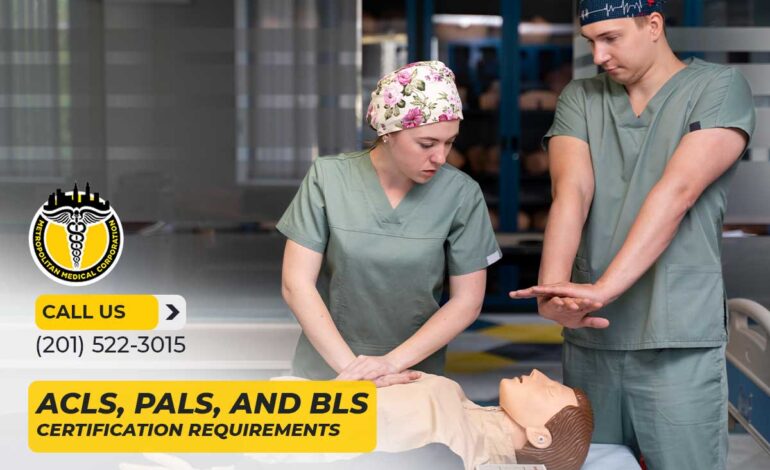
2026 Updates in ACLS, PALS, and BLS Certification Requirements

2026 Updates in ACLS, PALS, and BLS Certification Requirements

CPR Training

Online-only certifications are no longer accepted. To maintain your credentials, you must complete an in-person skills component or a hybrid model that includes a live, hands-on session with a certified instructor.

We bring the certification directly to your home or facility.

Whether you are an individual healthcare provider looking for a private 1-on-1 session or a facility manager organizing a large-scale group training for your staff, we make the logistics simple.

No more coordinating travel for 20 employees; our instructors arrive at your location fully equipped with high-fidelity mannequins and AED trainers.

Core 2026 Certification Requirements: The “Skills-First” Mandate

The Core 2026 Certification Requirements emphasize that life-saving skills are psychomotor, not just cognitive.

  1. Mandatory Skills Component: Effective January 1, 2026, you must demonstrate CPR and airway management on a feedback-enabled mannequin.
  2. Verified Instructors: Your certification must be signed off by a live instructor—a service MMC provides exclusively.
  3. No More “Click-Through” Certs: If your current provider says you can get an ACLS card in 20 minutes online, be careful. That certification may be rejected by your employer or board.

In-Person vs. Online: Why Your Career Depends on the Difference

While some competitors still offer “100% Online” courses, these frequently fail to meet the 2026 AHA standards. By choosing MMC’s in-person training in Lyndhurst, you guarantee:

  • Employer Acceptance: Hospitals and clinics in the Tri-State area trust MMC’s rigorous testing.
  • Confidence in Crisis: You don’t just “read” about a cardiac event; you practice the response until it’s muscle memory.
  • Immediate Certification: Walk away with your verified credentials the same day.

BLS vs. ACLS vs. PALS: Which Certification Do You Need?

If you are entering the healthcare field in 2026, navigating the alphabet soup of certifications – BLS, ACLS, and PALS is essential for your career and patient safety. With new mandates requiring in-person skills demonstrations, knowing exactly which course to take is more important than ever.

1. Basic Life Support (BLS)

Who needs it: Doctors, nurses, EMTs, dental professionals, and nursing students.

Focus: Recognition of cardiac arrest, AED use, and team dynamics.

2. Advanced Cardiovascular Life Support (ACLS)

Who needs it: Professionals in critical care, ER, cardiology, and anesthesia.

Focus: Rhythm interpretation, pharmacology, airway management, and advanced electrical therapy.

3. Pediatric Advanced Life Support (PALS)

Who needs it: Pediatricians, PICU nurses, and emergency responders.

Focus: Pediatric assessment, respiratory failure management, and shock algorithms.

Comparison Table

Certification Level of Care Primary Focus
BLS Basic Essential CPR & AED
ACLS Advanced Adult Cardiac Emergencies
PALS Advanced Pediatric Emergency Care


How to Organize Your Group Session or Individual Training

We believe that learning to save a life should be accessible, not stressful. We have streamlined our booking process to be as efficient as possible:

  • For Individuals: Book a session at your home for a private, focused environment.
  • For Groups/Facilities: We provide discounted rates for medical offices, schools, and corporate high-rises in New Jersey.

Ensure your ACLS, PALS, and BLS are up to date with the leaders in Lyndhurst emergency medical training.

Click here to book training. Phone: (201) 522-3015

Read More
How to do CPR on a child or baby

How to do CPR on a child or baby

CPR Training

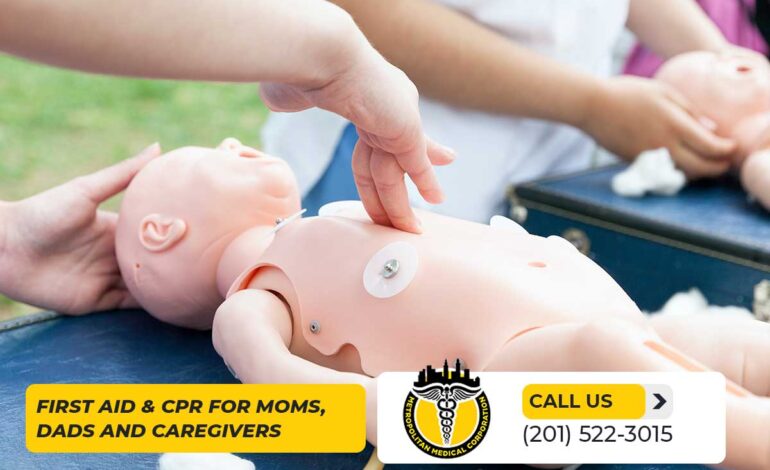
Family First Aid & CPR for Moms, Dads and Caregivers

Emergencies involving children or babies can happen in an instant. Whether you are a parent, a grandparent, or a childcare provider in New Jersey, New York or Connecticut knowing how to act quickly can be the difference between a tragedy and a recovery.

At Metropolitan Medical Corporation, we believe that every member of our community should feel empowered to act during a crisis. While this guide provides an overview of pediatric CPR, nothing replaces the confidence gained through hands-on, professional training.

Understanding CPR Basics for Parents

When to Act: Assessing the Situation

Before starting CPR, it is vital to know when the situation requires intervention. If a child or baby is not breathing or is breathing abnormally, follow these immediate steps:

  1. Check for Hazards: Ensure the area is safe for you and the child.
  2. Check Responsiveness:
    • Child: Tap their shoulders firmly.
    • Baby: Tap the bottom of their feet.
  3. Check Breathing: Look for chest movement and listen for breath. If they are not breathing, or breathing is abnormal, call your local emergency services immediately.

CPR Steps for Children and Babies

While waiting for professional help to arrive in NJ, follow these standardized steps:

For Children (1 to 18 years old)

  • Rescue Breaths: Tilt the head back, pinch the nose, and seal your mouth over theirs. Give 5 initial rescue breaths.
  • Compressions: Place one hand in the center of the chest. Push down about 5cm (one-third of chest depth) at a rate of 2 compressions per second. Perform 30 compressions.
  • Cycle: Continue the cycle of 2 rescue breaths and 30 compressions until help arrives or a defibrillator is ready.

For Babies (Under 1 year old)

  • Rescue Breaths: Cover both the nose and mouth with your mouth to create a seal. Give 5 initial rescue breaths.
  • Compressions: Use the heel of one hand or the two-thumb technique (encircling the chest). Press down about 4 cm (one-third of chest depth). Perform 30 compressions.Cycle: Continue the cycle of 2 rescue breaths and 30 compressions.

  • Defibrillator use during CPR
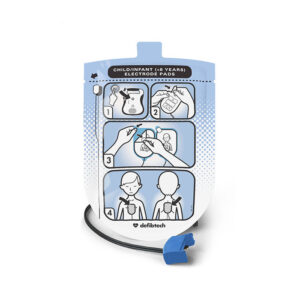
  • Note: If a defibrillator is available, use it immediately and follow the device’s audio prompts. Always prioritize using “child mode” or child-sized pads if they are available.

The Recovery Position

If the child or baby shows signs of life but is still unconscious, place them in the recovery position to keep their airway clear:

  • For Children: Roll them onto their side, bend the top knee for support, and tuck their hand under their cheek.
  • For Babies: Hold the baby in your arms, tilted slightly downward to prevent choking or the inhalation of vomit.

Final Thoughts On CPR Certification For Parents and Caregivers

Why Professional Training Matters

Reading a guide is a great first step, but muscle memory is built through practice. In a high-stress emergency, you don’t want to hesitate – you want to act.

At Metropolitan Medical Corporation in Lyndhurst, we provide comprehensive, hands-on CPR and First Aid training designed for real-world scenarios. Our certified instructors ensure you leave our class with the technical skills and the mental clarity needed to save a life.

Get certified on your own terms. Why travel for training when we can come to you?

At Metropolitan Medical Corporation, we specialize in bringing pediatric CPR and First Aid certification directly to your home or facility.

Whether you are an individual looking to learn or organizing a group session, we make it simple.

Click here to book training. Phone: (201) 522-3015

Read More