loader image
First Aid Training in New Jersey - Same Day CPR Certification

First Aid Training in New Jersey – Same Day CPR Certification

Need your CPR certification fast? We provide same Day CPR and First Aid Certification, in-person training across New Jersey.

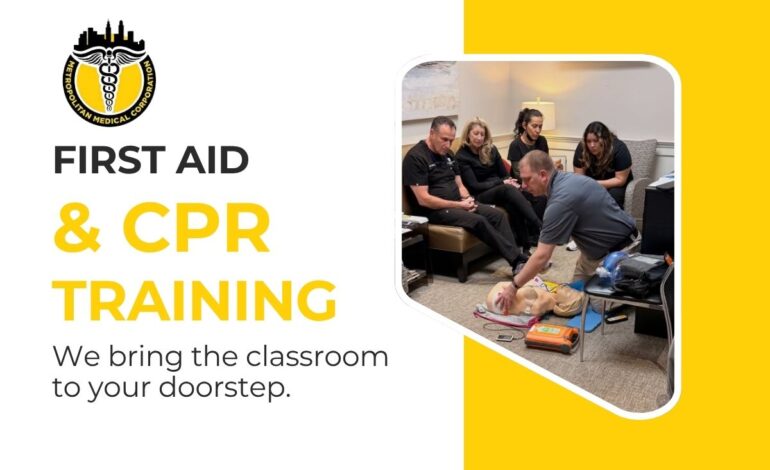
Whether you are a healthcare professional or a workplace safety coordinator, if you are searching for CPR and First Aid certification that fits your busy schedule, Metropolitan Medical Corporation offers the most flexible solutions in the Garden State. From Pulse Check CPR NJ standards to comprehensive lifesaving techniques, we bring the classroom to your doorstep.

Why Choose In-Person First Aid Training?

While online courses offer convenience, nothing beats the confidence gained through hands-on experience. In-person training allows you to master the exact depth of compressions and the rhythm of life-saving breaths under the direct guidance of experts.

Master the Life-Saving Tools

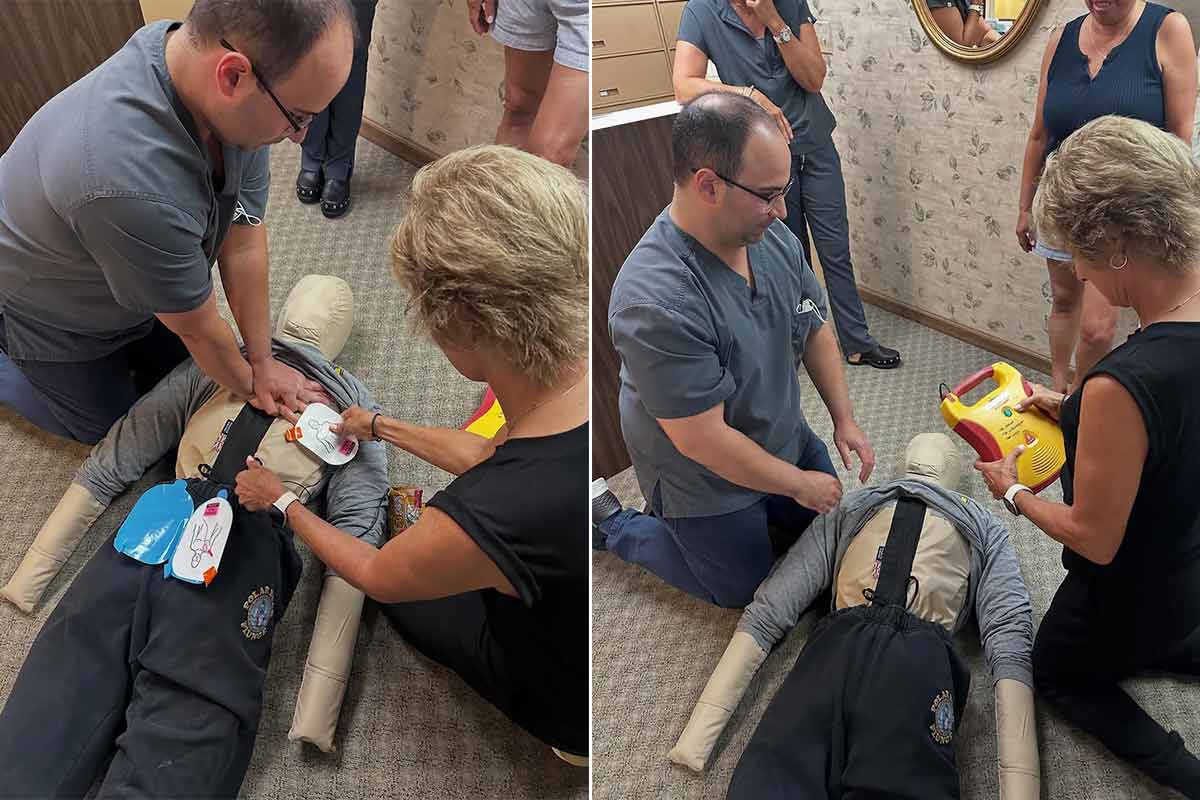
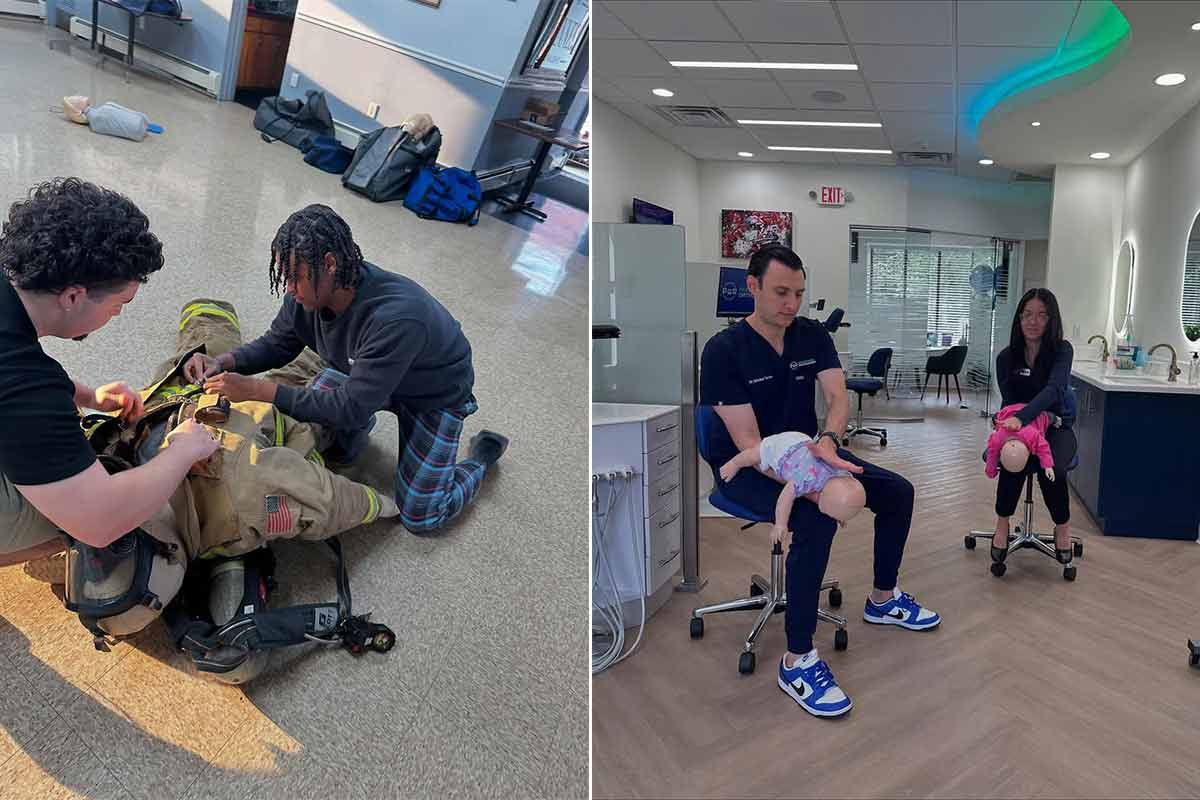
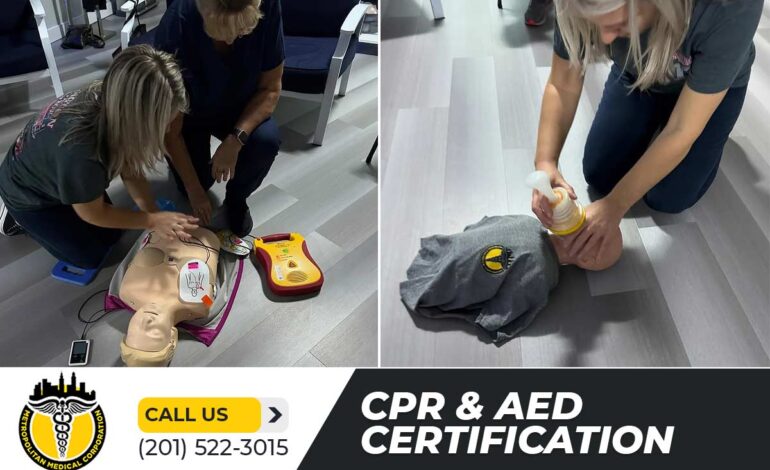
We believe in learning by doing. That’s why our classes use live equipment and real-world products to ensure you are ready for any emergency. You won’t just read about it-you’ll get hands-on practice with:

·LiveVAC units for choking emergencies.

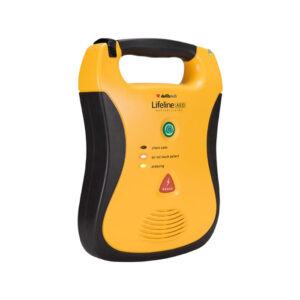
· Automated External Defibrillators (AED) to understand real-time prompts.

·Team CPR tactics to coordinate life-saving efforts seamlessly.

Benefits of Face-to-Face Learning:

  • Real-time Feedback: Instructors correct your form instantly.
  • Equipment Familiarity: Get comfortable using AEDs and manikins.
  • Confidence Building: You leave the session knowing you can actually perform the tasks in a high-pressure situation.

Same Day CPR Certification in New Jersey

We understand that many professionals need their credentials immediately for employment or licensing. That is why we specialize in same day CPR and First Aid services. Our streamlined process ensures that you receive high-quality instruction without the long wait times.

Whether you need CPR certification for the first time or a renewal, our programs are designed to be efficient and thorough. We cover everything from adult and child BLS (Basic Life Support) to specialized pediatric CPR for childcare providers and schools.

We Come to You: Mobile CPR Training in NJ

One of the biggest hurdles to getting certified is the commute. Why spend hours in New Jersey traffic when the experts can come to your home or facility?

Personalized Home Sessions

If you are an individual or a small family, we offer private in-person first aid sessions. This is particularly popular for new parents and grandparents who want to learn pediatric CPR in the comfort and privacy of their own living room.

CPR and Fist Aid Group and Corporate Training

For businesses, schools, and medical offices, organizing a group session is the most cost-effective way to ensure your entire team is compliant with NJ safety regulations. We bring all the necessary equipment to your location, minimizing downtime for your staff.

Comprehensive Lifesaving Skills

Our training isn’t just about chest compressions. A complete first aid course involves a wide range of emergency response skills, including:

  1. Choking Relief: Techniques for infants, children, and adults.
  2. Wound Care: Managing bleeding and preventing infection.
  3. Emergency Assessment: Identifying the signs of stroke, heart attack, or allergic reactions.
  4. AED Usage: Learning how to operate an Automated External Defibrillator safely.

Schedule Your Training Session Today!

Don’t wait until an emergency happens to realize you aren’t prepared. Whether you are looking for same day CPR, specialized pediatric CPR, or a full first aid certification, we make the process simple, mobile, and stress-free.

Get certified on your own terms. Metropolitan Medical Corporation is ready to help you gain the skills and confidence you need to save a life.

Contact Us:

  • Phone: (201) 522-3015
  • Service Area: All of New Jersey (NJ)
Call us today to book your in-person training and get your certification fast!

Read More
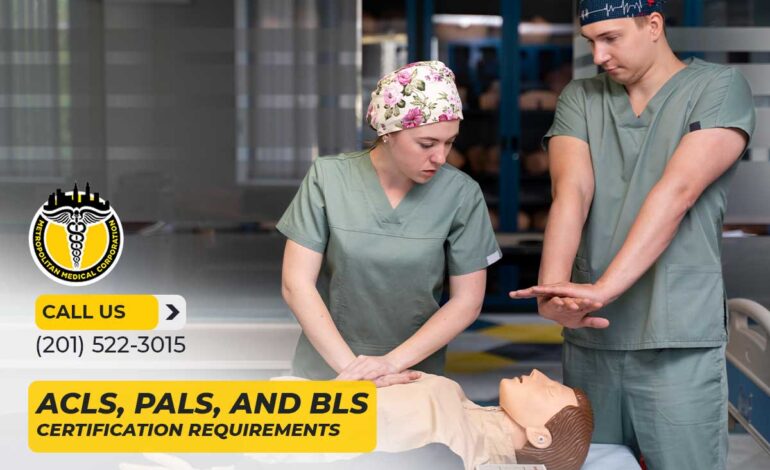
2026 Updates in ACLS, PALS, and BLS Certification Requirements

2026 Updates in ACLS, PALS, and BLS Certification Requirements

CPR Training

Online-only certifications are no longer accepted. To maintain your credentials, you must complete an in-person skills component or a hybrid model that includes a live, hands-on session with a certified instructor.

We bring the certification directly to your home or facility.

Whether you are an individual healthcare provider looking for a private 1-on-1 session or a facility manager organizing a large-scale group training for your staff, we make the logistics simple.

No more coordinating travel for 20 employees; our instructors arrive at your location fully equipped with high-fidelity mannequins and AED trainers.

Core 2026 Certification Requirements: The “Skills-First” Mandate

The Core 2026 Certification Requirements emphasize that life-saving skills are psychomotor, not just cognitive.

  1. Mandatory Skills Component: Effective January 1, 2026, you must demonstrate CPR and airway management on a feedback-enabled mannequin.
  2. Verified Instructors: Your certification must be signed off by a live instructor—a service MMC provides exclusively.
  3. No More “Click-Through” Certs: If your current provider says you can get an ACLS card in 20 minutes online, be careful. That certification may be rejected by your employer or board.

In-Person vs. Online: Why Your Career Depends on the Difference

While some competitors still offer “100% Online” courses, these frequently fail to meet the 2026 AHA standards. By choosing MMC’s in-person training in Lyndhurst, you guarantee:

  • Employer Acceptance: Hospitals and clinics in the Tri-State area trust MMC’s rigorous testing.
  • Confidence in Crisis: You don’t just “read” about a cardiac event; you practice the response until it’s muscle memory.
  • Immediate Certification: Walk away with your verified credentials the same day.

BLS vs. ACLS vs. PALS: Which Certification Do You Need?

If you are entering the healthcare field in 2026, navigating the alphabet soup of certifications – BLS, ACLS, and PALS is essential for your career and patient safety. With new mandates requiring in-person skills demonstrations, knowing exactly which course to take is more important than ever.

1. Basic Life Support (BLS)

Who needs it: Doctors, nurses, EMTs, dental professionals, and nursing students.

Focus: Recognition of cardiac arrest, AED use, and team dynamics.

2. Advanced Cardiovascular Life Support (ACLS)

Who needs it: Professionals in critical care, ER, cardiology, and anesthesia.

Focus: Rhythm interpretation, pharmacology, airway management, and advanced electrical therapy.

3. Pediatric Advanced Life Support (PALS)

Who needs it: Pediatricians, PICU nurses, and emergency responders.

Focus: Pediatric assessment, respiratory failure management, and shock algorithms.

Comparison Table

Certification Level of Care Primary Focus
BLS Basic Essential CPR & AED
ACLS Advanced Adult Cardiac Emergencies
PALS Advanced Pediatric Emergency Care


How to Organize Your Group Session or Individual Training

We believe that learning to save a life should be accessible, not stressful. We have streamlined our booking process to be as efficient as possible:

  • For Individuals: Book a session at your home for a private, focused environment.
  • For Groups/Facilities: We provide discounted rates for medical offices, schools, and corporate high-rises in New Jersey.

Ensure your ACLS, PALS, and BLS are up to date with the leaders in Lyndhurst emergency medical training.

Click here to book training. Phone: (201) 522-3015

Read More
How to do CPR on a child or baby

How to do CPR on a child or baby

CPR Training

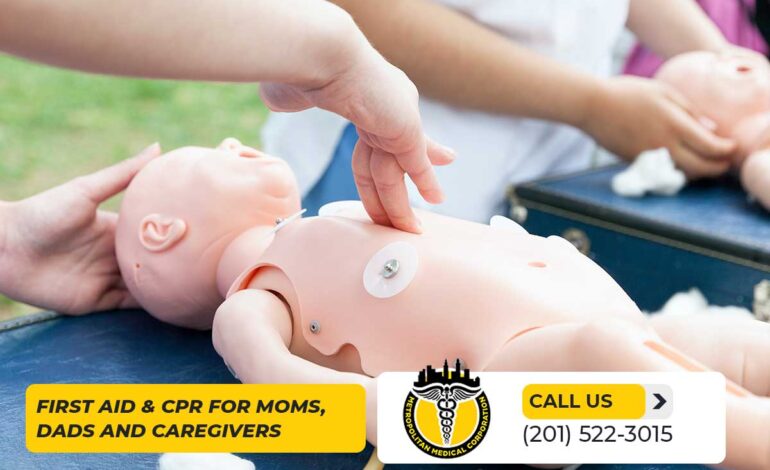
Family First Aid & CPR for Moms, Dads and Caregivers

Emergencies involving children or babies can happen in an instant. Whether you are a parent, a grandparent, or a childcare provider in New Jersey, New York or Connecticut knowing how to act quickly can be the difference between a tragedy and a recovery.

At Metropolitan Medical Corporation, we believe that every member of our community should feel empowered to act during a crisis. While this guide provides an overview of pediatric CPR, nothing replaces the confidence gained through hands-on, professional training.

Understanding CPR Basics for Parents

When to Act: Assessing the Situation

Before starting CPR, it is vital to know when the situation requires intervention. If a child or baby is not breathing or is breathing abnormally, follow these immediate steps:

  1. Check for Hazards: Ensure the area is safe for you and the child.
  2. Check Responsiveness:
    • Child: Tap their shoulders firmly.
    • Baby: Tap the bottom of their feet.
  3. Check Breathing: Look for chest movement and listen for breath. If they are not breathing, or breathing is abnormal, call your local emergency services immediately.

CPR Steps for Children and Babies

While waiting for professional help to arrive in NJ, follow these standardized steps:

For Children (1 to 18 years old)

  • Rescue Breaths: Tilt the head back, pinch the nose, and seal your mouth over theirs. Give 5 initial rescue breaths.
  • Compressions: Place one hand in the center of the chest. Push down about 5cm (one-third of chest depth) at a rate of 2 compressions per second. Perform 30 compressions.
  • Cycle: Continue the cycle of 2 rescue breaths and 30 compressions until help arrives or a defibrillator is ready.

For Babies (Under 1 year old)

  • Rescue Breaths: Cover both the nose and mouth with your mouth to create a seal. Give 5 initial rescue breaths.
  • Compressions: Use the heel of one hand or the two-thumb technique (encircling the chest). Press down about 4 cm (one-third of chest depth). Perform 30 compressions.Cycle: Continue the cycle of 2 rescue breaths and 30 compressions.

  • Defibrillator use during CPR
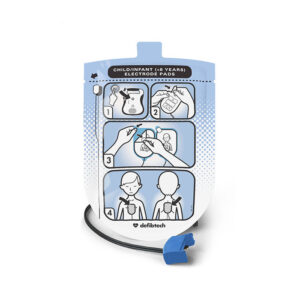
  • Note: If a defibrillator is available, use it immediately and follow the device’s audio prompts. Always prioritize using “child mode” or child-sized pads if they are available.

The Recovery Position

If the child or baby shows signs of life but is still unconscious, place them in the recovery position to keep their airway clear:

  • For Children: Roll them onto their side, bend the top knee for support, and tuck their hand under their cheek.
  • For Babies: Hold the baby in your arms, tilted slightly downward to prevent choking or the inhalation of vomit.

Final Thoughts On CPR Certification For Parents and Caregivers

Why Professional Training Matters

Reading a guide is a great first step, but muscle memory is built through practice. In a high-stress emergency, you don’t want to hesitate – you want to act.

At Metropolitan Medical Corporation in Lyndhurst, we provide comprehensive, hands-on CPR and First Aid training designed for real-world scenarios. Our certified instructors ensure you leave our class with the technical skills and the mental clarity needed to save a life.

Get certified on your own terms. Why travel for training when we can come to you?

At Metropolitan Medical Corporation, we specialize in bringing pediatric CPR and First Aid certification directly to your home or facility.

Whether you are an individual looking to learn or organizing a group session, we make it simple.

Click here to book training. Phone: (201) 522-3015

Read More
Workplace & Group CPR Training in New Jersey

Workplace & Group CPR Training in New Jersey

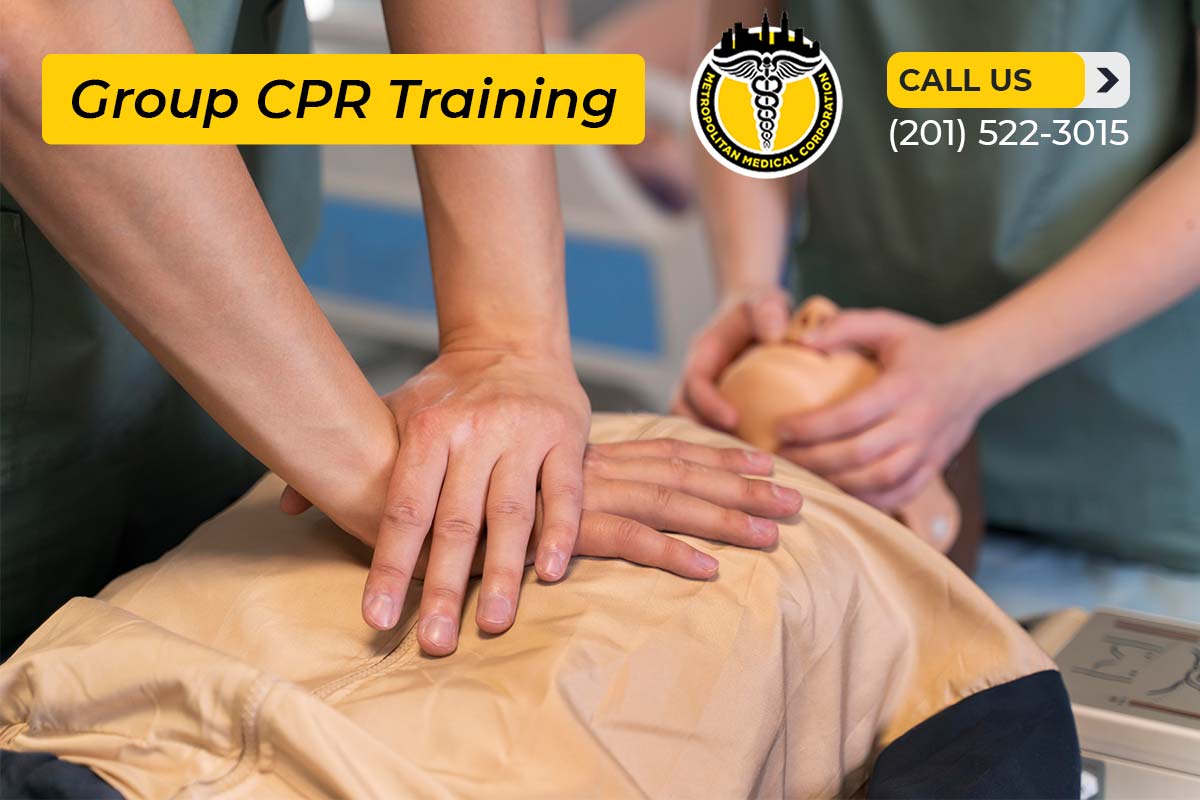
Make sure your team knows what to do in an emergency. Empower your team with life-saving skills through Metropolitan’s Group CPR Training in New Jersey. We bring BLS, CPR, First Aid, ACLS, PALS, EMT, EMR, and Bloodborne Pathogen courses directly to your office, serving schools, warehouses, and businesses of all sizes. Our professional instructors ensure hands-on, practical training tailored for your team. Choose the training time that works best for your team!

Call now at (201) 522-3015

Group CPR Training in New Jersey

Q1: Who can attend group CPR training?
A: Any team, school, warehouse, or organization looking to learn life-saving skills.

Q2: Can Metropolitan conduct training at our office?
A: Yes! We bring BLS, CPR, First Aid, ACLS, PALS, EMT, EMR, and Bloodborne Pathogen courses directly to your workplace.

Q3: How long is a group CPR training session?
A: Sessions typically last 2–4 hours depending on the course type and group size.

Q4: Can we schedule training at our preferred time?
A: Absolutely! Call now at (201) 522-3015 to pick a time that works best for your team.

Q5: Do participants receive certifications?
A: Yes! All courses come with official certifications upon completion.

group-CPR-training-session

Why Group CPR Training Matters
Emergencies don’t wait for convenient times, and every second counts. By providing your team with CPR and first aid training, you’re not just meeting safety standards-you’re giving your employees the confidence to act quickly and save lives. Proper training reduces panic during emergencies and ensures the right procedures are followed, whether it’s a cardiac arrest, choking, or workplace injury.

Customized Training for Your Team
At Metropolitan, we understand that every workplace is different. That’s why our instructors customize each session to reflect the real scenarios your team may face. For example, a school staff group may focus on student-related emergencies, while a warehouse team may emphasize injury response and accident prevention. Hands-on practice ensures your staff is not just trained but prepared to act effectively.

Benefits Beyond Certification
While every participant leaves with official certification, the benefits go beyond paperwork:

  • Enhanced Workplace Safety: Trained employees create a safer work environment.
  • Team Confidence: Staff know how to respond calmly under pressure.
  • Reduced Liability: Proper training can help organizations meet OSHA and other workplace safety requirements.
  • Positive Workplace Culture: Investing in employee safety shows you care, boosting morale and trust.

Schedule a Group CPR Training session today
We know your team has busy schedules. That’s why we offer flexible training times and come directly to your location. Whether it’s a morning session, lunch-and-learn, or after-hours program, we work around your team’s availability to ensure maximum participation without disrupting your workflow.
Don’t wait for an emergency to happen – be proactive and prepared. Protect your employees, students, or staff by scheduling a Group CPR Training session today.

Call (201) 522-3015 to discuss course options, schedule your session, and give your team the life-saving skills they need.

Read More

First Aid Essentials and Certification for Winter Emergencies

Knowing the first aid essentials for cold weather emergencies and having proper first aid training can make all the difference in keeping you and your loved ones safe this winter.

From frostbite during outdoor activities to slips on icy sidewalks, cold weather can bring unexpected emergencies. Being prepared is key, and having the right first aid knowledge can make all the difference. At Metropolitan Medical Corporation, we provide expert training and resources to ensure you are ready for any winter emergency.

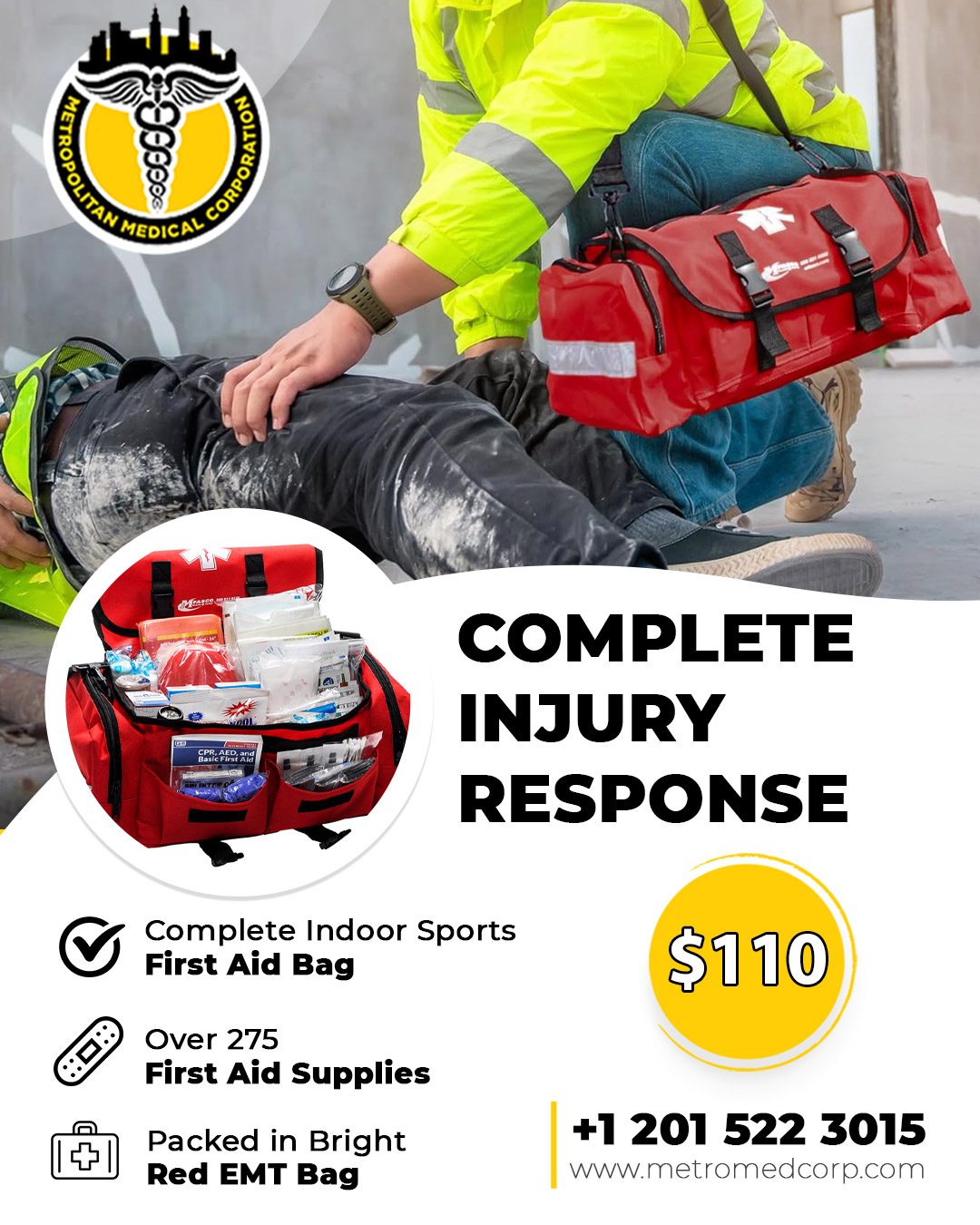
For a cold weather emergency, a first-aid kit should include standard supplies like bandages and antiseptics, as well as items to combat cold, such as thermal blankets, extra clothing layers, and hand warmers.

Hypothermia: Recognizing and Responding to Cold Exposure

Hypothermia occurs when your body loses heat faster than it can produce it, causing your core temperature to drop dangerously low. This is especially common during winter months if you’re outdoors for extended periods.

Signs and Symptoms:

  • Shivering
  • Slurred speech
  • Slow, shallow breathing
  • Weak pulse
  • Confusion and drowsiness

First Aid Steps:

  1. Move the person to a warm, sheltered location.
  2. Remove wet clothing and replace it with dry, warm layers.
  3. Gradually warm the person with blankets, body heat, or warm drinks (avoid alcohol).

Pro Tip: Early recognition of hypothermia can prevent it from worsening. For expert guidance, enroll in Metropolitan Medical Corporation’s Adult & Pediatric CPR/AED, BLS, and First Aid certification training.

Frostbite: Protecting Extremities from the Cold

Frostbite damages the skin and underlying tissues due to extreme cold. Fingers, toes, ears, and nose are most vulnerable.

Signs of Frostbite:

  • Pale or grayish-yellow skin
  • Numbness or prickling sensations
  • Hardened, waxy-looking skin
  • Blistering in severe cases

First Aid Tips:

  1. Move the person to a warm location immediately.
  2. Do not rub the affected areas.
  3. Warm the skin by soaking in warm (not hot) water for 15–30 minutes.

Slips and Falls: Treating Ice-Related Injuries

Winter hazards like icy sidewalks can cause sprains, strains, or fractures. Prevention is best, but first aid knowledge is essential.

Prevention Tips:

  • Wear footwear with good traction
  • Use salt or sand on walkways
  • Take smaller steps on icy surfaces

First Aid:

  • Sprains & Strains: Use R.I.C.E. (Rest, Ice, Compression, Elevation).
  • Fractures: Immobilize and seek medical help immediately.
  • Head Injuries: Watch for dizziness, nausea, confusion, and seek urgent care if symptoms worsen.

Carbon Monoxide Poisoning: The Silent Winter Danger

Using heaters and stoves more frequently in winter increases the risk of CO poisoning. This colorless, odorless gas is especially dangerous in poorly ventilated spaces.

Symptoms:

  • Headache, dizziness
  • Nausea, vomiting
  • Confusion, shortness of breath

First Aid Response:

  1. Evacuate to fresh air immediately.
  2. Administer CPR if the person is unconscious and not breathing.

Tip: For life-saving skills, enroll in Metropolitan Medical Corporation’s CPR and First Aid training.

First Aid Essentials and Training with Metropolitan Medical Corporation

Winter can bring a range of first aid challenges. Being prepared for cold-weather emergencies is crucial for your safety and that of your loved ones.

Stay ready by:

  • Maintaining a winter-first-aid kit
  • Taking certified courses in CPR, First Aid, BLS, and more

Metropolitan Medical Corporation offers expert certifications and essential first aid products to help you handle any winter emergency with confidence.

If your team is interested in BLS CPR & AED training or would like to learn more about LifeVac or other medical devices, don’t hesitate to reach out. We’re here to help ensure you have the training and equipment needed to respond effectively in any emergency.

Call now (201) 522-3015

Read More
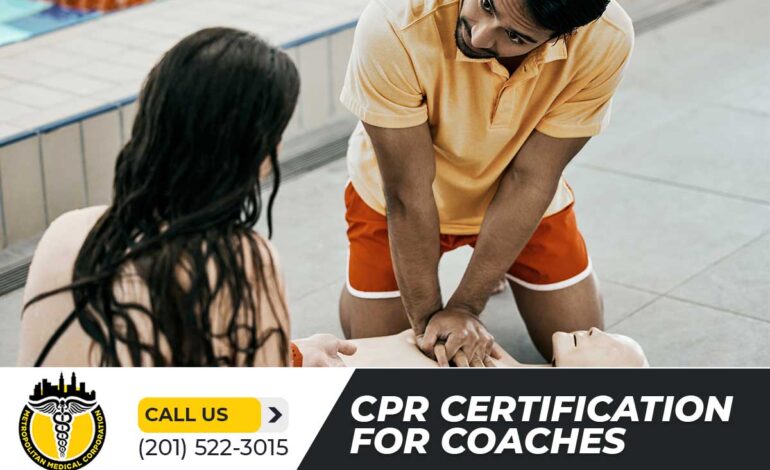
CPR certification for coaches

CPR for Coaches: How Athletic Trainers Can Prepare for Emergencies

CPR Training

In the high-stakes world of sports, a coach’s job isn’t just to train athletes to perform—it’s to keep them safe, too. While athletic trainers and coaches excel at injury prevention and fitness, what happens when an emergency strikes during practice or a game? That’s where CPR training for coaches becomes critical.

Whether you’re coaching in a school district, a local sports league, or at a professional level, CPR and AED certification isn’t just a bonus—it’s a life-saving necessity. At Metropolitan, we understand the vital role coaches play in responding to medical emergencies, and we’re here to help you get prepared.

Why Is CPR Certification So Important for Coaches?

Emergencies don’t wait. A young athlete could collapse from sudden cardiac arrest (SCA), suffer a heat stroke, seizure, or even experience asthma-related breathing trouble. When seconds count, a coach with CPR training can make the difference between life and death.

According to the American Heart Association, over 350,000 out-of-hospital cardiac arrests occur in the U.S. each year. Immediate CPR can double or triple survival rates. For athletic coaches, that means being the first responder on the field before EMS arrives.

Key Emergencies Coaches Must Be Prepared For

1. Cardiac Arrest

  • Can happen without warning—even in young, healthy athletes.
  • CPR and AED use are crucial in the first few minutes.

2. Heatstroke

  • Common in hot weather, especially during summer practices.
  • Coaches need to recognize the signs and begin cooling and CPR if necessary.

3. Choking

  • Coaches should be trained in abdominal thrusts (Heimlich maneuver).
  • Fast action restores breathing and prevents complications.

4. Seizures

  • Recognizing symptoms early can prevent further injury.
  • Knowing when to administer CPR is essential post-seizure if breathing stops.

5. Asthma Attacks

  • Athletes with asthma may suffer severe attacks on the field.
  • CPR and airway management can save lives when medication is unavailable or ineffective.

6. Concussions and Head Trauma

  • If a player loses consciousness or isn’t breathing, CPR may be needed while waiting for EMS.

Basic Principles of CPR Every Coach Should Know

✔ Ensure scene safety

✔ Check responsiveness

✔ Call 911 & retrieve AED

✔ Start chest compressions (at least 2 inches deep, 100–120 per minute)

✔ Open the airway

✔ Give 2 rescue breaths

✔ Repeat the 30:2 compression-to-breath ratio

✔ Continue until help arrives or athlete shows signs of life

High-quality CPR is not about just knowing what to do—it’s about doing it correctly and confidently.

Every Coach Should Be CPR Certified

You already play a vital role in shaping young athletes’ futures—why not also ensure you’re prepared to protect their lives? A CPR certification isn’t just about meeting regulations; it’s about being ready to respond when it matters most.
Get CPR certified with Metropolitan today and help create a safer sports environment for everyone.

Read More
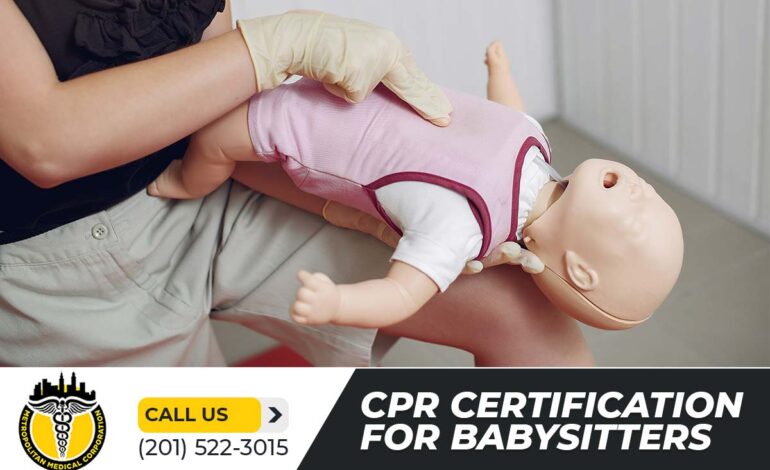
CPR Certification Requirements for Babysitters in New Jersey

CPR Certification Requirements for Babysitters in New Jersey

As a babysitter in New Jersey, ensuring the safety of the children in your care is a top priority. One way to boost your qualifications and give parents peace of mind is by obtaining CPR, AED, and First Aid certification. Not only is it a requirement for many child care providers, but it can also make you a more attractive candidate for parents. In this blog post, we’ll discuss the CPR certification requirements for babysitters in New Jersey, as well as how you can get certified with Metropolitan Medical Corporation.

CPR Certification Requirements for Babysitters in New Jersey

In New Jersey, child care providers, including babysitters, are required to maintain certifications in Adult, Child, and Infant (Pediatric) CPR, AED (Automated External Defibrillator), and First Aid. These certifications must include practical skills evaluations, which can be completed through in-person training programs. At Metropolitan Medical Corporation, we offer in-person Babysitter’s Training and Pediatric First Aid/CPR courses that will fully prepare you for these important certifications.

Our program is specifically designed for babysitters, providing education on:

·       First Aid for emergencies and injury prevention

·       Pediatric CPR & AED for children and infants

·       Safety awareness to minimize risks

How Long Does a CPR Certification Last in New Jersey?

Once you complete the CPR, AED, and First Aid course at Metropolitan Medical Corporation, you’ll receive 1-year certification. The certification lasts for one year, after which you will need to renew it to maintain your status as a qualified child care provider. This ensures that you stay up-to-date with the latest techniques and safety standards.

How Old Do You Have to Be to Be a Babysitter in New Jersey?

In New Jersey, there is no minimum age to begin babysitting. However, you must be at least 16 years old to work for an employer. Babysitters younger than 16 can still care for children with parental permission, but they should be certified in CPR, AED, and First Aid to provide the safest care.

What Is a CPR Certificate?

A CPR certificate is awarded to individuals who complete a course that teaches them the knowledge and skills needed to provide cardiopulmonary resuscitation (CPR). The course includes a combination of theory and practical hands-on training. During the training, you’ll learn how to respond to cardiac and breathing-related emergencies for adults, children, and infants. The skills you learn in CPR training can be lifesaving in a variety of situations.

The Importance of CPR Certification for Babysitters

8 in 10 parents say they would pay more for a babysitter who is CPR certified!

This is because CPR-trained babysitters are seen as more capable in handling emergencies, giving parents peace of mind when leaving their children in someone else’s care. By getting certified, you’ll not only meet the state’s requirements but also increase your chances of securing babysitting jobs.

Call Us for More Information

At Metropolitan Medical Corporation, we offer top-notch training for babysitters and child care providers in New Jersey.

Whether you’re looking to get your first CPR certification or need to renew your credentials, our Pediatric First Aid/CPR courses are designed to give you the practical knowledge and hands-on experience you need.

Contact us today at +1 201-522-3015 for more information and to schedule your training!

Read More
CPR & AED Certification for Massage and Wellness Centers in NJ

CPR & AED Certification for Massage and Wellness Centers in NJ

Team members from Zen Massage Center in Maywood, NJ and Blue Amber Spa & Wellness Center in Wallington, NJ took an important step in safety and professional development—they completed the American Heart Association Heartsaver CPR & AED certification course.

The training covered Infant, Child, and Adult CPR, how to properly use an Automated External Defibrillator (AED), and how to respond to choking emergencies. These are life-saving skills that go far beyond the treatment room – they empower staff to act quickly and confidently in critical moments, whether at work or out in the community.

During the session, staff members asked great questions, participated actively, and walked away with valuable knowledge. At Metropolitan Medical Corporation, we believe every wellness center should have certified team members who are trained to handle emergencies. Whether you run a massage center, spa, or wellness facility, CPR and AED certification are essential.

We thank all the professionals who attended and look forward to seeing more centers join us in our upcoming training sessions.

What Is CPR and Why Is It Important?

CPR (Cardiopulmonary Resuscitation) is a life-saving technique used when someone’s heart stops beating. By performing chest compressions and rescue breaths, you help keep blood and oxygen flowing to the brain and vital organs. In many cases, especially in spas, wellness centers, or massage clinics, staff may be the first to respond in an emergency – making CPR training crucial for massage therapists and wellness professionals.

What Is an AED?

An AED (Automated External Defibrillator) is a portable device that can analyze the heart’s rhythm and, if needed, deliver an electrical shock to help re-establish a normal heartbeat. It’s simple to use and gives step-by-step voice instructions. Knowing how to use an AED in an emergency can drastically improve survival rates during sudden cardiac arrest.

How to Respond to Choking Emergencies: Training with LifeVac

Choking can happen suddenly, and quick action is essential. In wellness centers, where clients may be eating or drinking before or after treatments, it’s important to be prepared for such emergencies. While traditional methods like the Heimlich maneuver are commonly used, sometimes they may not be effective. That’s where LifeVac comes in.

What Is LifeVac?

LifeVac is a life-saving device designed to assist in choking emergencies when standard methods aren’t successful. It’s simple to use, non-invasive, and works by creating a vacuum seal over the victim’s mouth and nose. With a single pull, LifeVac generates suction strong enough to help dislodge an obstruction from the airway, restoring normal breathing.

LifeVac Choking First Aid Device

In addition to CPR and AED renewal, the staff was introduced to the LifeVac Choking First Aid Device—a life-saving tool designed to help clear blocked airways during choking emergencies. LifeVac provides a simple, non-invasive solution when traditional methods like the Heimlich maneuver fail or cannot be administered (e.g., in cases where the individual is in a wheelchair or has a medical condition that complicates standard procedures). The staff at Margolin Dental Associates now has this powerful tool at their disposal, further ensuring the safety of their patients in any emergency. Whether it’s a medical procedure or an unexpected choking incident, having access to LifeVac adds an extra layer of preparedness and confidence to the team’s already exceptional care.

Why Use LifeVac in Wellness Centers?

Wellness centers, spas, and massage therapists are often in close contact with clients, making them well-positioned to recognize and respond to choking incidents. However, not all staff members may be trained in traditional first aid. Having LifeVac on hand ensures that if a choking emergency occurs, there’s a reliable tool available that can help when other methods fail. Ready to Get Certified?

At Metropolitan Medical Corporation, we ensure that your team is prepared for any emergency, including choking incidents. We offer comprehensive CPR and AED certification courses tailored to wellness and massage centers across New Jersey.

Contact us today to schedule your next certification session and ensure your staff is ready to act confidently and effectively in any emergency situation. Phone: (201) 522-3015
Read More