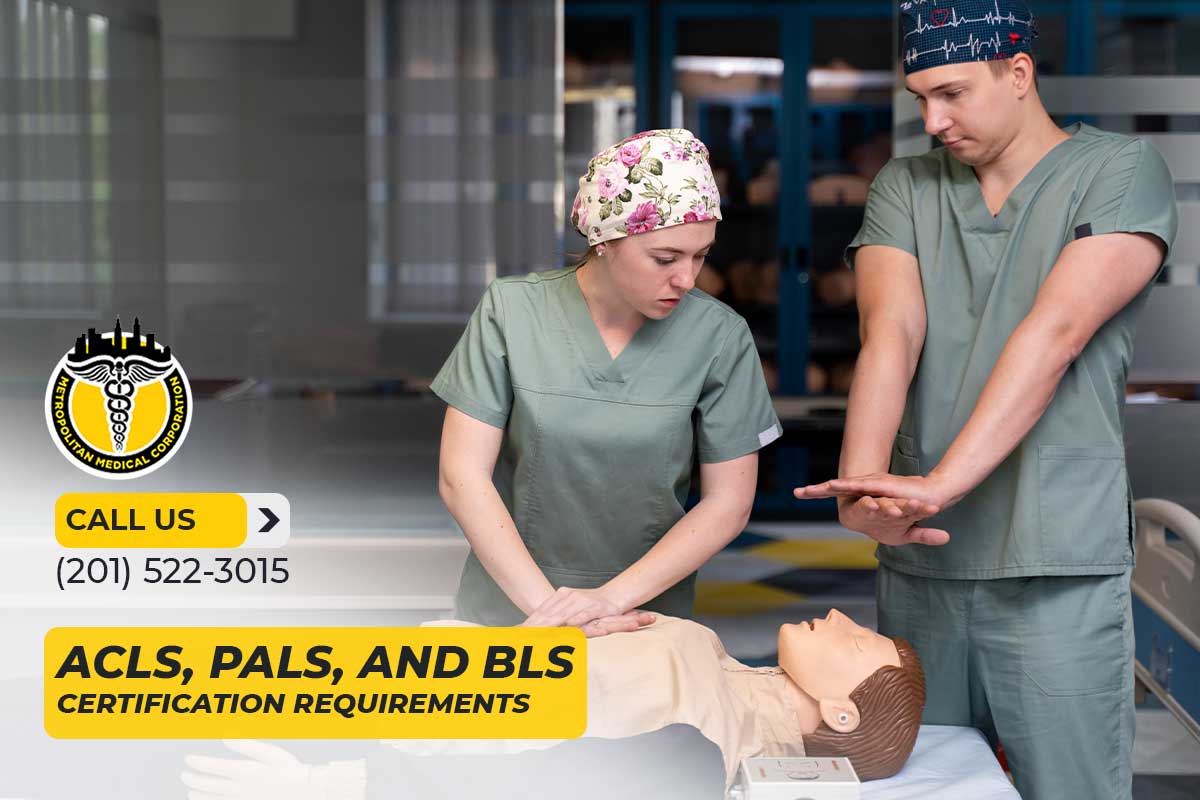
Online-only certifications are no longer accepted. To maintain your credentials, you must complete an in-person skills component or a hybrid model that includes a live, hands-on session with a certified instructor.
We bring the certification directly to your home or facility.
Whether you are an individual healthcare provider looking for a private 1-on-1 session or a facility manager organizing a large-scale group training for your staff, we make the logistics simple.
No more coordinating travel for 20 employees; our instructors arrive at your location fully equipped with high-fidelity mannequins and AED trainers.
Core 2026 Certification Requirements: The “Skills-First” Mandate
The Core 2026 Certification Requirements emphasize that life-saving skills are psychomotor, not just cognitive.
- Mandatory Skills Component: Effective January 1, 2026, you must demonstrate CPR and airway management on a feedback-enabled mannequin.
- Verified Instructors: Your certification must be signed off by a live instructor—a service MMC provides exclusively.
- No More “Click-Through” Certs: If your current provider says you can get an ACLS card in 20 minutes online, be careful. That certification may be rejected by your employer or board.
In-Person vs. Online: Why Your Career Depends on the Difference
While some competitors still offer “100% Online” courses, these frequently fail to meet the 2026 AHA standards. By choosing MMC’s in-person training in Lyndhurst, you guarantee:
- Employer Acceptance: Hospitals and clinics in the Tri-State area trust MMC’s rigorous testing.
- Confidence in Crisis: You don’t just “read” about a cardiac event; you practice the response until it’s muscle memory.
- Immediate Certification: Walk away with your verified credentials the same day.
BLS vs. ACLS vs. PALS: Which Certification Do You Need?
If you are entering the healthcare field in 2026, navigating the alphabet soup of certifications – BLS, ACLS, and PALS is essential for your career and patient safety. With new mandates requiring in-person skills demonstrations, knowing exactly which course to take is more important than ever.
1. Basic Life Support (BLS)
Who needs it: Doctors, nurses, EMTs, dental professionals, and nursing students.
Focus: Recognition of cardiac arrest, AED use, and team dynamics.
2. Advanced Cardiovascular Life Support (ACLS)
Who needs it: Professionals in critical care, ER, cardiology, and anesthesia.
Focus: Rhythm interpretation, pharmacology, airway management, and advanced electrical therapy.
3. Pediatric Advanced Life Support (PALS)
Who needs it: Pediatricians, PICU nurses, and emergency responders.
Focus: Pediatric assessment, respiratory failure management, and shock algorithms.
Comparison Table
| Certification | Level of Care | Primary Focus |
| BLS | Basic | Essential CPR & AED |
| ACLS | Advanced | Adult Cardiac Emergencies |
| PALS | Advanced | Pediatric Emergency Care |
How to Organize Your Group Session or Individual Training
We believe that learning to save a life should be accessible, not stressful. We have streamlined our booking process to be as efficient as possible:
- For Individuals: Book a session at your home for a private, focused environment.
- For Groups/Facilities: We provide discounted rates for medical offices, schools, and corporate high-rises in New Jersey.
Ensure your ACLS, PALS, and BLS are up to date with the leaders in Lyndhurst emergency medical training.
Click here to book training. Phone: (201) 522-3015