

CPR for Coaches: How Athletic Trainers Can Prepare for Emergencies
In the high-stakes world of sports, a coach’s job isn’t just to train athletes to perform—it’s to keep them safe, too. While athletic trainers and coaches excel at injury prevention and fitness, what happens when an emergency strikes during practice or a game? That’s where CPR training for coaches becomes critical.
Whether you’re coaching in a school district, a local sports league, or at a professional level, CPR and AED certification isn’t just a bonus—it’s a life-saving necessity. At Metropolitan, we understand the vital role coaches play in responding to medical emergencies, and we’re here to help you get prepared.
Why Is CPR Certification So Important for Coaches?
Emergencies don’t wait. A young athlete could collapse from sudden cardiac arrest (SCA), suffer a heat stroke, seizure, or even experience asthma-related breathing trouble. When seconds count, a coach with CPR training can make the difference between life and death.
According to the American Heart Association, over 350,000 out-of-hospital cardiac arrests occur in the U.S. each year. Immediate CPR can double or triple survival rates. For athletic coaches, that means being the first responder on the field before EMS arrives.
Key Emergencies Coaches Must Be Prepared For
1. Cardiac Arrest
- Can happen without warning—even in young, healthy athletes.
- CPR and AED use are crucial in the first few minutes.
2. Heatstroke
- Common in hot weather, especially during summer practices.
- Coaches need to recognize the signs and begin cooling and CPR if necessary.
3. Choking
- Coaches should be trained in abdominal thrusts (Heimlich maneuver).
- Fast action restores breathing and prevents complications.
4. Seizures
- Recognizing symptoms early can prevent further injury.
- Knowing when to administer CPR is essential post-seizure if breathing stops.
5. Asthma Attacks
- Athletes with asthma may suffer severe attacks on the field.
- CPR and airway management can save lives when medication is unavailable or ineffective.
6. Concussions and Head Trauma
- If a player loses consciousness or isn’t breathing, CPR may be needed while waiting for EMS.
Basic Principles of CPR Every Coach Should Know
✔ Ensure scene safety
✔ Check responsiveness
✔ Call 911 & retrieve AED
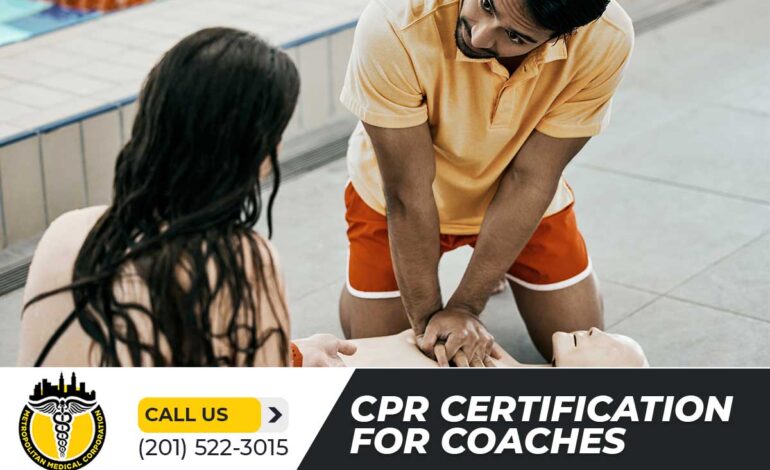
✔ Start chest compressions (at least 2 inches deep, 100–120 per minute)
✔ Open the airway
✔ Give 2 rescue breaths
✔ Repeat the 30:2 compression-to-breath ratio
✔ Continue until help arrives or athlete shows signs of life
High-quality CPR is not about just knowing what to do—it’s about doing it correctly and confidently.
Every Coach Should Be CPR Certified
You already play a vital role in shaping young athletes’ futures—why not also ensure you’re prepared to protect their lives? A CPR certification isn’t just about meeting regulations; it’s about being ready to respond when it matters most.
Get CPR certified with Metropolitan today and help create a safer sports environment for everyone.