


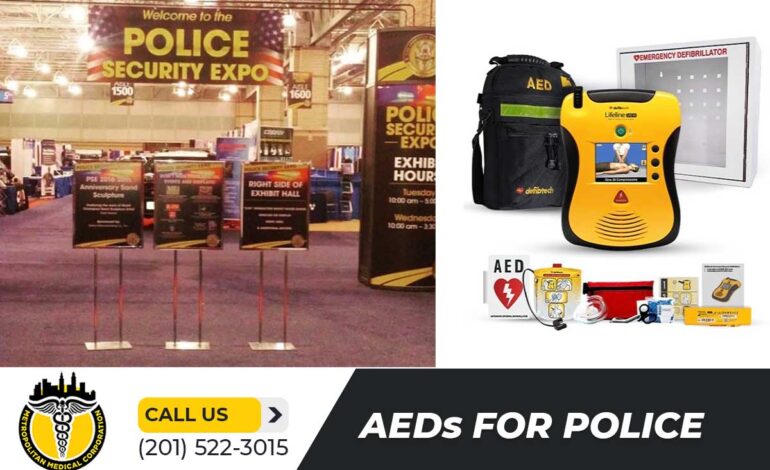
AEDs for Police: How Officers Save Lives Faster Than Ambulances
Every year, more than 350,000 people in the United States suffer sudden cardiac arrest (SCA) outside of hospitals.
- The chances of survival decrease by 7 to 10 percent for every minute that passes without defibrillation.
- In busy metropolitan areas, where seconds matter most, equipping police vehicles with Automated External Defibrillators (AEDs) can be a game-changer in saving lives.
Why AEDs in Police Vehicles Matter
Police officers are often the first responders to arrive at the scene of an emergency, including sudden cardiac arrest incidents. Their proximity and rapid response time make them uniquely positioned to provide immediate life-saving care.
While Emergency Medical Services (EMS) average a seven-minute response time, this delay can be deadly in cardiac emergencies. AEDs in police cruisers allow officers to deliver defibrillation without waiting for an ambulance, increasing the chance of survival.
How AEDs Help Save Lives During Sudden Cardiac Arrest
AEDs are easy-to-use, portable devices that analyze a victim’s heart rhythm and deliver an electric shock if needed to restore a normal heartbeat.
They provide clear voice and visual instructions, allowing trained police officers and even bystanders to administer potentially life-saving defibrillation quickly and effectively.
The Gap in AED Access for Police
Despite 80% of police forces responding to medical emergencies, only about 31% of police vehicles are equipped with AEDs. This gap highlights the urgent need for law enforcement agencies to prioritize AED programs to better serve their communities during sudden cardiac arrest events.
Steps Police Officers Take Using AEDs
- Start CPR immediately upon identifying cardiac arrest.
- Retrieve and operate the AED device.
- Attach electrode pads to the victim’s chest as guided.
- Deliver a shock if advised, ensuring safety protocols are followed.
- Continue CPR and follow AED prompts until EMS arrives.
Saving More Lives with AEDs and Police Collaboration
Equipping police vehicles with AEDs transforms law enforcement officers into critical first responders for sudden cardiac arrest emergencies. The combination of rapid response, CPR, and early defibrillation can dramatically improve survival rates in metropolitan communities.
By expanding AED accessibility within police departments, more lives can be saved every year.
How To Use Defibtech Lifeline AED